By Biko Caruthers
“I’d say my mother gave me all the primary things. The art came from her.”—Jean-Michel Basquiat
I first critically encountered Jean-Michel Basquiat’s art laying on my couch recovering from a colectomy in May 2017. Scrolling through my twitter feed I retweeted an article that stated: “Basquiat Painting Sells to Yusaku Maezawa for $110.5 Million at Sotheby’s Auction, Shattering Records.” I was perplexed and taken aback by this untitled 1982 painting. The feeling was bittersweet, as I lay there on my back looking down at the colostomy bag attached to the left side of my abdomen and the staples running from the top of my pubic area to just around and above my navel. I would later learn that both Basquiat and I have scars from differing abdominal surgeries. In my bitter affect, I couldn’t help but wonder what could have been in regards to my artistic pursuits. Seeing the tweets about how Basquiat’s painting was the highest price ever paid for a work by an American artist took me back to my senior year of high school.
Painting was supposed to be my thing. Since childhood, I drew, colored, sketched, and crafted, all from the enthusiastic encouragement of my mother. She often reminded me that “the art,” my artistic inclinations came from her and her side of the family.
My first teacher was my mother. She homeschooled me at the age of four, teaching me shapes, letters, colors and how to enjoy simple pleasures like the baked sweet potatoes we ate while watching Bewitched.
Growing up in Cleveland, Ohio I went to Charles F. Brush High school. I enrolled in various painting classes and decided I wanted to go to Art school. Like Basquiat, I envisioned my ascent in the world through art whether as a painter or a cartoonist.
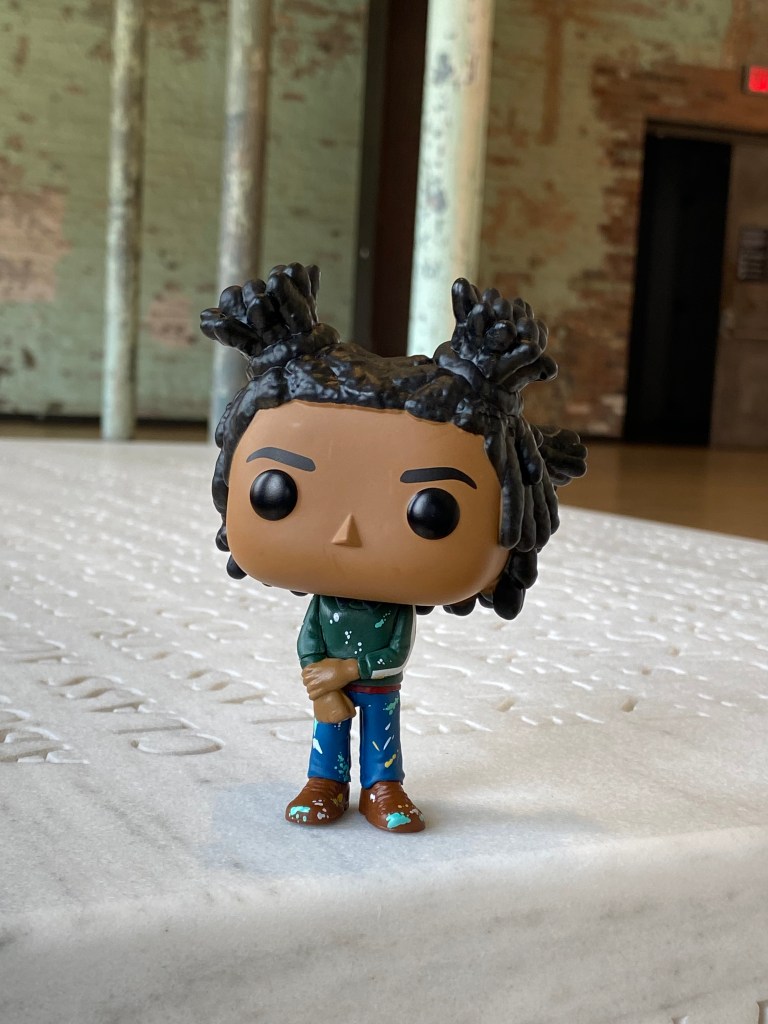
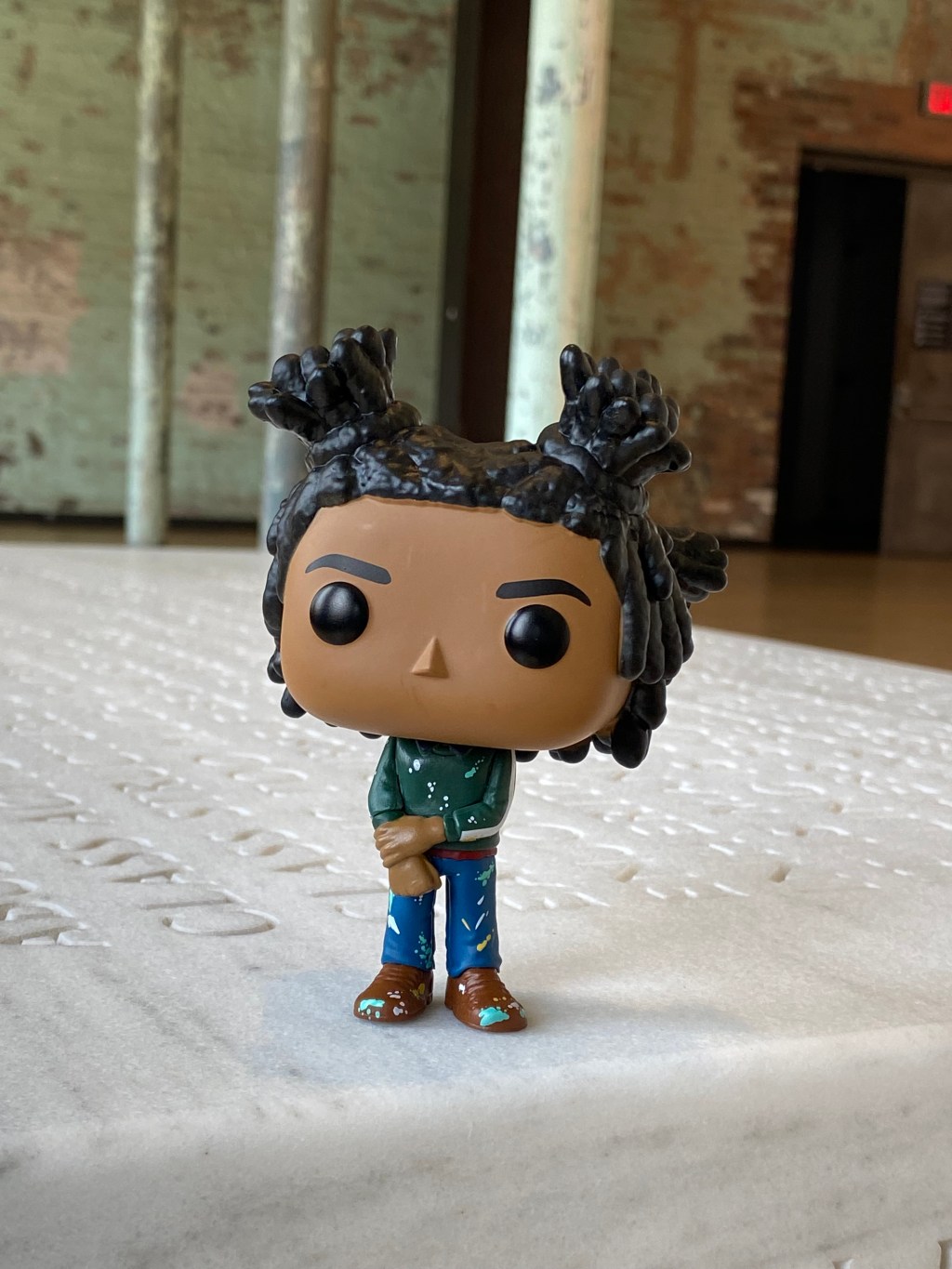
When I think about myself alongside Basquiat, I also think of our thoughts about teachers. Jean-Michel Basquiat was very clear in what he got from his mother and that was his art or more specifically his artistic ability. He named his mother as one of his first teachers. Basquiat is perhaps one of the most well-known black artists of the twentieth century. His persona, works, and life can be encountered on totes, backpacks, clothing, and even funko pops. We know him, in short, due to what his mother gave him—his art.
While I am not trying to manifest the same meteoric ascent into fame in regards to my teaching career I am interested in connecting some dots in regards to how teachers impact how we interface with the world(s).
My junior year of high school was my best year (2004-2005), that was the moment words like hope and art were hard to disentangle whenever I thought about my future. However, right before my senior year of high school, my family packed up and moved to Winston-Salem, NC. I wasn’t excited for this move and as I made my way through the first week of my senior year of high school, I hit a wall. My Ohio painting teacher, Ms. Curry recommended me for AP Art, and when I signed up for courses at my new high school in North Carolina, I took it upon myself to enroll in the same course. Unfortunately, I encountered what I now know to call anti-Blackness. I don’t remember her name, but I remember the way the blonde-haired white woman gatekept Advanced Placement Art. Her view of my work cast me out of a particular art world.

To her, I didn’t have the skills to stay in the class. I soon ended up in the assistant principal’s office and was told that due to a technicality, I had to be in Commercial Art. I had not taken all of the prerequisites… the first assignment we had in AP art required us to take a long piece of yarn, dip it in some ink, then proceed to place it between two large sheets of paper in order to create a design. After that we were to create a work of art from the random inked image. I chose to work with bright orange, yellow, and green pastels to create an amphibious creature. I worked hard that first day of class, but never got to finish my piece.. In an interview, Basquiat mentioned that as a student at Edward R. Murrow High School in Brooklyn, he was “the only child that failed a life drawing class”. Reflecting back on his high school years he also explained, “I was a really lousy artist as a kid… Too abstract expressionist; or I’d draw a big ram’s head, really messy. I’d never win painting contests. I remember losing to a guy who did a perfect Spider-Man…I really wanted to be the best artist in class, but my work had a really ugly edge to it. There was a lot of ugly stuff going on in my family” (Phoebe Hoban 24).
I include the autobiographical here as a statement about Black Being and Black Life. Specifically, about Black childhood in the afterlife of slavery. I cite Basquiat, as I place his Black story, his Black narrative alongside mine. The two of us have entered and walked through the same “blood stained gate” bearing the marks of our mothers—this rune of Blackness.
On this rune of Blackness, the shared marks from our mothers, Saidiya Hartman explains, “The condition of the mother marked her offspring was ‘forever entailed on her remotest posterity.’ We carry the mother’s mark and it continues to define our condition and our present.”
While I want to avoid celebrating an inheritance of dispossession that is possible due to the blackening of my mother and foremothers, I do appreciate the ways in which I’ve maintained a certain amount of l clarity in regards to what’s a stake whenever I create or stand in front of a classroom teaching history. I have nothing to lose and an exploration of what can be gained through art and through the instruction of a history that hurts.
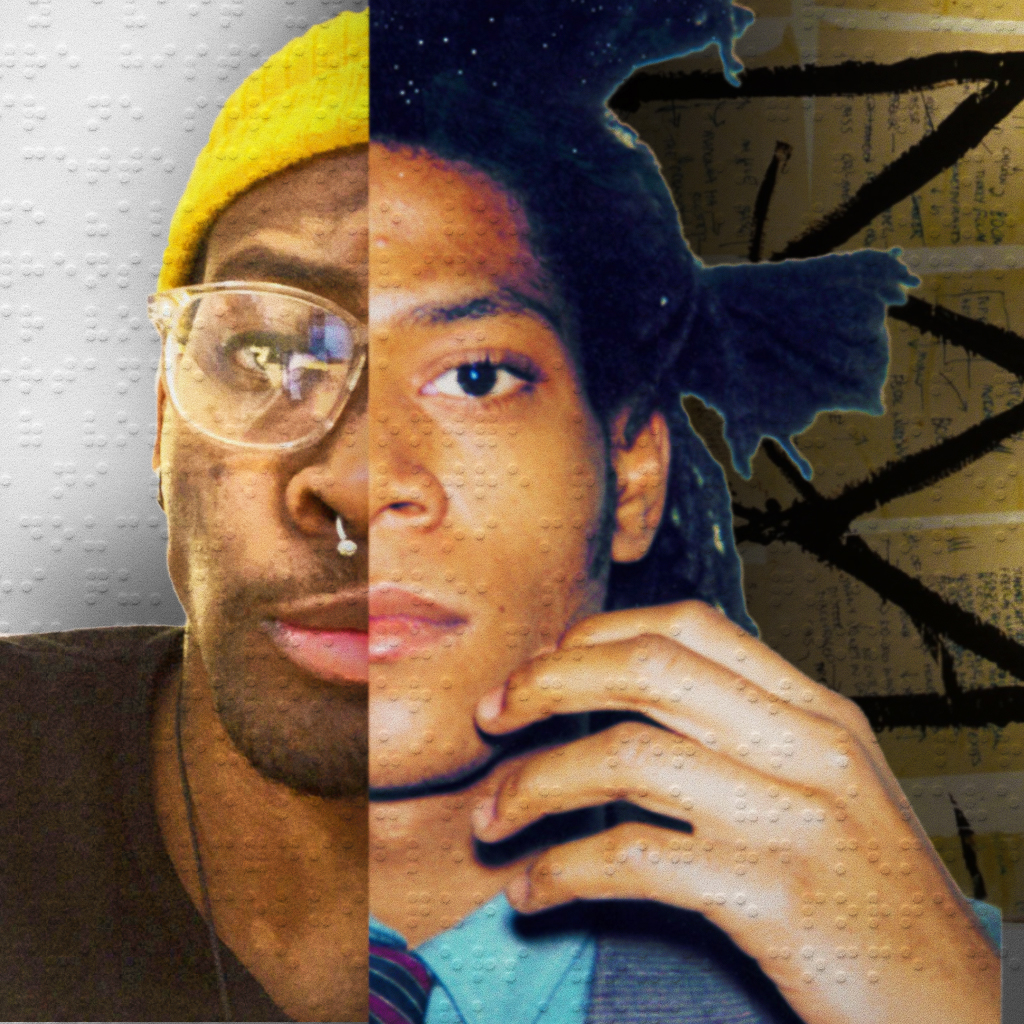
In my youth and Basquiat’s, we both thought and created art in a world partly structured and maintained by the afterlives of slavery. Our Black mothers gave us life and our Black mothers encouraged us in art. When I speak of this connection I am speaking of a shared intimacy with Basquiat and also an intimacy with the maternal. José Esteban Muñoz revealed a key component of Basquiat’s intimacy in his 1982 painting titled Dos Cabezas:
As Muñoz has pointed out, in this canvas Basquiat envisions himself as equal to his friend and mentor by painting the figures roughly the same size; here they are intellectual partners. But it is also a gesture of interculturation in which Basquiat makes Warhol speak en español. It is a voice of intimacy for Basquiat as well: the voice of the mother who herself was an artist, and inspired and promoted her son’s creativity…The language of intimacy is thus the same as that of the intellect, and it is read through the accent of the mother” (Kellie Jones, 171)
And when Basquiat was asked about his mother, “I’d say my mother gave me all the primary things. The art came from her” (Phoebe Hoban).
My first teacher was my mother. She homeschooled me at the age of four, teaching me shapes, letters, colors and how to enjoy simple pleasures like the baked sweet potatoes we ate while watching Bewitched.
At the age of 34, three decades later, I credit my mother with my confidence in teaching. I credit my art teacher, Ms. Curry, for my confidence in my approach to art. In short, our teachers can be some of the loudest voices speaking to our psyches. These voices don’t ever quiet down or hush and we call upon them when we have moments to pause.
I’m going full tilt with my teaching now and it’s due to a newly found appreciation for how I’ve been impacted by teachers before in positive ways and in negative and antiblack ways…
Edited and formatted by C. Wright
 BIKOCARUTHERS.COM
Leave a comment